In global trade, all goods crossing the border from one country or economic area into another require a customs clearance. If that customs clearance process is not managed well, it can trigger delays and fines that can disrupt your business and create unhappy customers.
It’s in your best interest to understandthe ins and outs of customs clearance services to keep your goods flowing smoothly. In this article, we’ll break it all down.
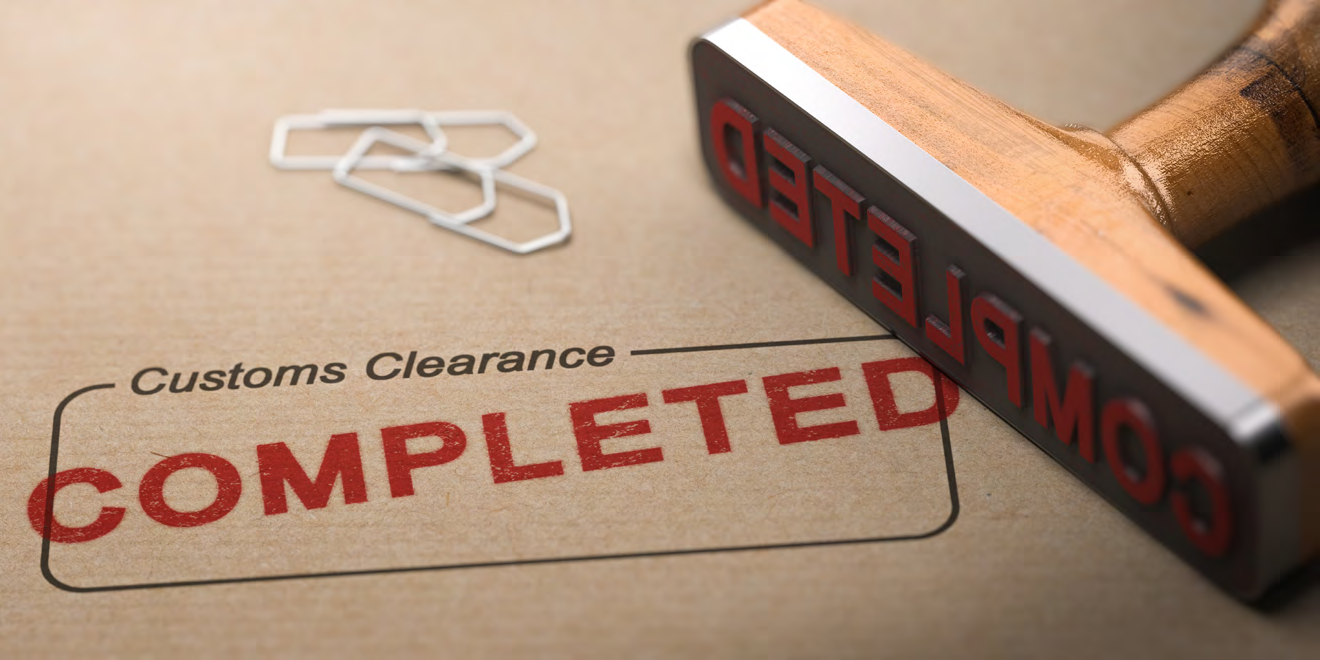
If you’re importing goods into the United States, U.S. Customs and Border Protection (CBP) wants the answer to four fundamental questions about your product:
If these questions are answered clearly as part of the customs clearance process, it’s a good start to achieving your objective as an importer: to bring in goods without delay and in full compliance with U.S. laws and regulations.
Tariffs are a policy tool of the government. They are taxes on imported (and occasionally exported) goods used to generate revenue, protect domestic industries, or influence trade policy. A tariff defines the rate or rule that applies to a specific product category.
Duties are the actual chargespaid on a specific shipment as part of or in addition to tariffs, such as 10% of declared value. The tariff rules are set by the government. The duty is the calculated amount owed based on the product’s classification, value, quantity, and country of origin.
HS Codes define the exact commoditybeing imported. There are about 5,600 specific codes defined by the World Customs Organization (WCO). With so many options, you’d think there would be a definitive code for your product, but there can still be grey areas.
Let’s dive a little deeper on HS codes. These Harmonized System (HS) codes are a globally recognized classification framework used by more than 200 countries to categorize traded products. By assigning standardized numerical codes to specific goods, the system creates a common language that enables businesses, customs authorities, and governments to identify products consistently across borders, regardless of language or regional differences.
HS codes streamline trade documentation and compliance processes, helping reduce errors and misunderstandings in customs declarations, trade agreements, tariff determinations, and legal contracts.
The Harmonized Tariff Schedule (HTS) used in the U.S. builds on the Harmonized System. The US International Trade Commission (ITC) publishes the Harmonized Tariff Schedule of the United States (HTSUS), which extends the WCO’s six-digit HS code to 10 digits to define specific duty rates in the U.S. and meet statistical reporting requirements. It’s CBP’s system for defining the commodity.
OK, so how are HS codes used to determine the money you owe to clear customs? The two relevant formulas are:
Before we leave the subject of tariffs, there have been U.S. tariff policy changes in recent years that involve higher or adjusted tariffs on certain imports — particularly from China — and additional duties on products that the U.S. believes are unfairly subsidized abroad.
Under Section 301 of the Trade Act of 1974, the U.S. can impose tariffs if it believes another country’s trade practices harm U.S. businesses. Section 301 tariffs have most notably applied to a wide range of goods imported from nations worldwide, which now carry extra tariffs beyond normal import duties.
Anti-dumping and countervailing duties are special import duties the U.S. may impose to protect domestic industries from unfair foreign competition. Anti-dumping duties are triggered when foreign manufacturers sell products in the U.S. at prices lower than their normal value in their home market.
Countervailing duties address situations where foreign governments provide subsidies such as tax breaks or financial assistance that allow companies to sell at lower prices in foreign markets.
In these cases, the U.S. may add extra import duties to level the playing field.
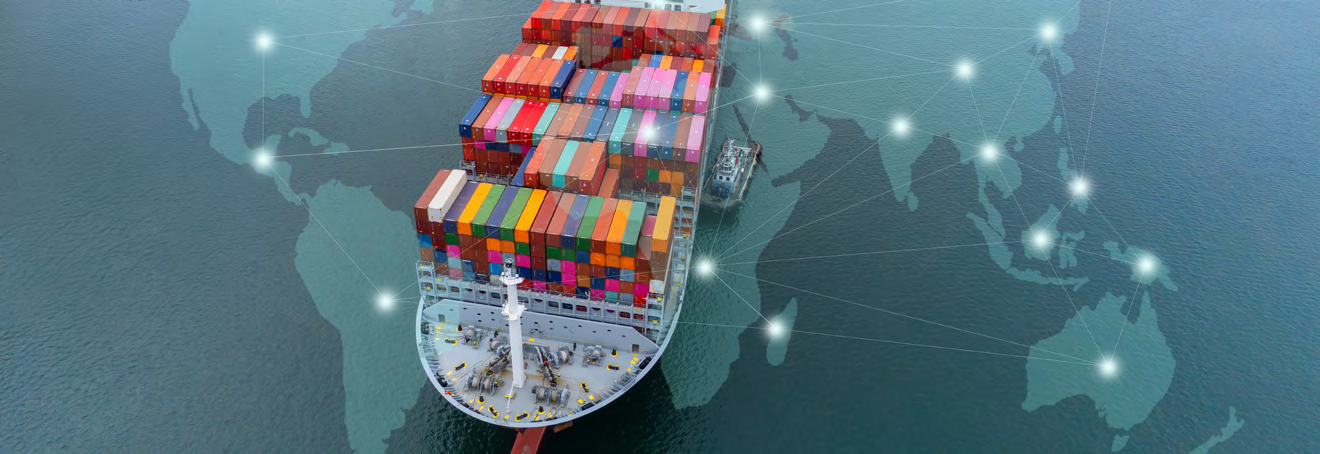
Forocean freight, customs clearance and physical availability of the container are related but separate steps. After a vessel docks, containers must be discharged and “arrived” in CBP’s system by the steamship line or terminal. That’s when an electronic release can be granted.
Under ideal conditions, if the ship docks today, then as soon as the line makes that electronic filing that the shipment has ‘arrived,’ the release is put in rightaway. If the shipment is admissible and released immediately, the container is available for pickup the next business day. But that doesn't happen often.
In practice, drayage capacity and terminal congestion are the limiting factors. Truckers typically will not schedule a pickup until the container shows up on their board as fully released and available, and they rarely have same-day or next day capacity from the moment of release. Realistically, two business days after vessel arrival is the earliest likely pickup window.
Pre-filing speeds up customs clearance by submitting documentation before the ship arrives. CBP runs automated checks, screens for potential issues, and coordinates with agencies, if required. They can then decide whether to release the shipment, place it on hold for examination, or request more information days before the vessel reaches the terminal.
If everything is in order and the shipment is admissible, you can have what’s effectively an “on arrival”release waiting in the system. This gives you, as the importer, the best chance of a pickup within a couple business days of vessel arrival.
Beyond transportation, the process for importing goods into the U.S. includes a variety of government fees, professional customs clearance services, and potential duties. While the total cost varies by shipment, most importers will encounter several standard charges when clearing goods through CBP.
Let’s review the customs clearance workflow overseen by CBP. Your customs broker can spell out in detail the particulars of what your experience will look like. While the details vary by shipment, the basic process follows these steps:
As noted, the ISF must be submitted at least 24 hours in advance of the vessel departure. Once the shipment is en route, the filer ofrecord, typically the customs broker, prepares the formal import entry using documents such as the BOL, commercial invoice, and packing list.
Many brokers submit the entry several days before the vessel arrives. A customs broker often provides the importer’s documents to the filer/broker. For example, Gateway Customs Services provides entry documentation at least a week prior to arrival to allow enough time to deal with any errors or omissions. While providing that much lead time is advantageous to the importer, it’s definitely not standard practice with many logistics providers
After submission, CBP reviews the entry and the supporting documentation. In some cases, the agency may place a hold or select the cargo for random inspection (more on that later).
Applicable duties, taxes, and fees must be paid in accordance with CBP regulations.
If no holds are placed, CBP releases the shipment upon arrival. The cargo can then be picked up from the port, rail terminal or bonded warehouse.
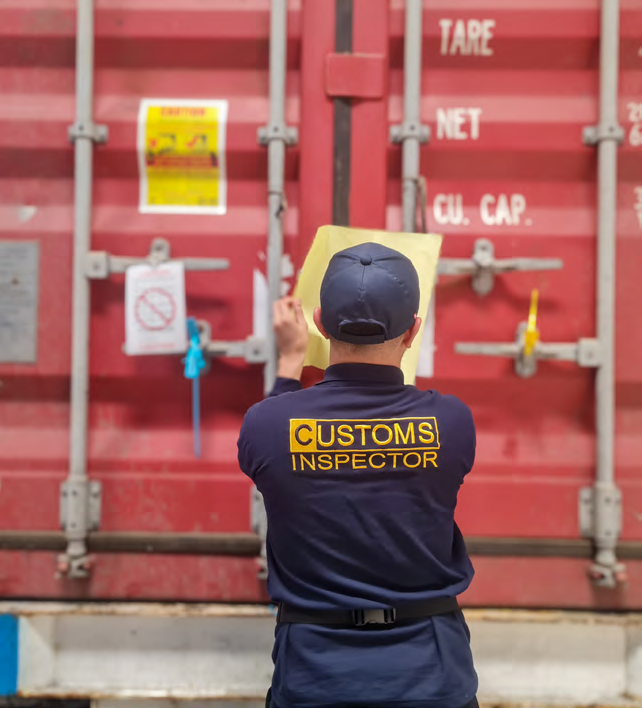
U.S. customs exams are a common source of delays and additional costs during the import process. While many shipments clear quickly, containers may be selected for inspection by CBP, either randomly or because the shipment is flagged. Documentation issues such as a late ormissing ISF, incomplete paperwork, or inaccurate cargo descriptions can trigger an exam.
Importers are generally responsible for the inspection costs, which may include exam fees, drayage to the exam site, and demurrage or detention charges while the container is held. To reduce the risk of an exam, importers should work closely with an experienced provider of customs clearance services.
Like they say in baseball (or used to), you can’t tell the players without a scorecard! So here’s your lineup in the world of customs clearance services:
Importer of Record (IOR)
The IOR is the person or business entity named on all import documentation. They are the party in a transaction legally responsible for ensuring imported goods comply with all CBP requirements. The IOR is also responsible for declaring the value of imported goods, their proper classification/HS Code, and their country of origin.
While multiple parties might be involved in moving goods into the country and filing paperwork, ultimately it’s the IOR that is liable for any penalties. The IOR must ensure all required documentation is accurate and submitted on time, that duties, taxes, and fees are paid, and that the shipment fully adheres to all customs laws.
CBP
In cross-border freight, customs clearance into the U.S. begins and ends with CBP. Its personnel process goods shipped from other nations, with the twin goals of public safetyand proper collection of duties and fees. Every shipment, whether by ocean, air or truck, must be inspected and “cleared” to leave the port of entry with a CBP stamp of approval.
Carrier
The carrier can be a steamship line, a trucking firm, or an air cargo operator. For the most part, smaller shippers don’t deal directly with the carrier to secure bookings, leaving that responsibility to a logistics provider. Large corporations tend to have their own internal transportation departments to handle all that.
Customs Broker
A customs broker prepares and submits documentation to CBP, ensures duties and taxes are calculated correctly, and handles regulatory compliance. Acting as a licensed intermediary, the broker communicates directly with CBP and coordinates the release of goods.
In certain situations, a customs broker may agree to serve as the Importer of Record, depending on the nature of the shipment and the specific needs of the importer. In these instances, contractual agreements clearly define responsibilities and legal liabilities.
Most brokers are cautious about acting as IOR because it carries significant financial and compliance risk. For that reason, the IOR is typically a party with a direct financial interest in the goods, such as the buyer, seller, or consignee.
Freight Forwarders and NVOCCs
Freight forwarders and NVOCCs are responsible for arranging goods transport, but don’t own the actual ships, trucks,or planes. Think ofthem like a travel agent, but for freight. These transportation providers are not responsible for customs filings, but they may prepare documentation such as the bill of lading (BOL), packing list, certificate of origin, and import declaration (more on documentation in the next section). In this, they work in close coordination with customs brokers. Often, forwarders themselves also provide customs brokerage services.
Government Agencies
Depending on the commodity being imported, other federal agencies mayplay a role in ensuring imports meet safety, environmental, and regulatory standards:
These agencies work alongside CBP to review documentation, conduct inspections, and clear shipments for lawful entry.Each may require its own paperwork for products that fall under its purview. Any of them can call for a container inspection, either randomlyor because a shipmentis flagged.
The following documents are part of the clearance process on all US imports:

In a perfect world, every shipment arrives on time at the destination port, sails through customs, and is sent by truck or train to the end customer within the delivery window. Unfortunately, that perfect world doesn’t exist. Here’s what often slows things down:
Improperly Classified Goods. Incorrect HS classification is one of the most common causes of customs clearance delays. When imported goods are assigned the wrong tariff code, CBP may flag the entry for additional review while verifying the correct classification. This can delay release of the shipment and may require the importer to submit revised documentation or pay additional duties and taxes. Misclassification can also lead to incorrect duty assessments, especially when shipments aresubject to additional tariffs such as those imposed under Section 301 (Chinese goods) and Section232 (steel and aluminum).
In some cases, goods within the same shipment may require multiple codes, making accurate classification more complex. Working with an experienced customs broker can significantly reduce these risks. They help verify product descriptions, ensure correct documentation, and stay current on tariff updates. Their expertise helps importers maintain compliance, avoid costly errors, and prevent clearance delays.
Documentation Errors. Other documentation glitches can trigger clearance delays. These issues typically force the forwarder or CBP officials to request corrections before the entry can be processed:
As noted briefly above, a customs bond is a financial guarantee required by CBP to ensure that importers pay all duties, taxes, and fees owed. In most cases, a bond is required for imports valued at $2,500 or more or low value shipments that require government agency filings. A customs entry cannot be filed until the bond is secured and confirmed.
Customs bonds are issued by a surety companyand form a three-party agreement between the importer of record, the surety provider, and CBP. The bond allows shipments to move through customs because it guarantees that CBP will be paid if any duties or penalties are assessed.
A single-entry bond covers one shipment and is usually equal to the value of the goods plus applicable duties and fees. The bond value istripled if there are participating government agencies involved.
A continuous bond covers multiple shipments for one year and is generally set at 10% of the importer’s annual duties and taxes, making it the preferred option for frequent importers. The minimum continuous bond value is $50,000.
CBP also monitors bond sufficiency, meaning the bond amount must adequately cover an importer’s duty exposure. If imports or their values and fees payable to CBP increase significantly, CBP may require the importer to increase the bond amount to maintain compliance.
Most companies obtain customs bonds through a licensed customs broker, who coordinates with a surety company and submits the bond documentation to CBP as part of the import process.
CBP allows importers to correct entry summaries after filing through a process called Post Summary Correction (PSC). Because CBP generally does not review supporting documents at the time of entry, it relies on the customs broker — whose license is at stake — to file accurate data based on the paperwork provided by the importer.
If the importer discovers, for example, an incorrect customs value or HS classification on the commercial invoice, they can submit a PSC to replace the previously transmitted summary data. The ideal time to file a PSC is within the 10 business days before duties are paid, so the corrected duty amount is collected on time with no underpayment or overpayment. PSCs may be filed up until liquidation, typically 314 days after arrival, but late corrections can trigger interest on amounts owed or delay refunds.
Separately, certain agencies require “prior notice”or other advance filings for specific types of cargo, such as FDA-regulated goods, which must be made before arrival.
Brokers, importers and freight forwarders or NVOCCs are all subject to CBP audits. CBP may review 6–12 months of records to verify compliance. While brokers and forwarders maintain records for their own audit obligations, the IOR is ultimately responsible for record keeping and must be able to produce complete files (invoices, BOL, entry summaries, etc.) upon request.
The customs clearance process does not forgive inexperience. Misclassified products, missed filings, or poor documentation quickly turn into delays, storage charges, and penalties. That’s why it pays to work with a partner that combines deep customs expertise with day to day freight experience.
A provider like Gateway Customs Services sees the full picture: sailing schedules, terminal conditions, and CBP requirements. That allows us to pre-file entries, anticipate issues, and coordinate drayage the moment a container is available. You’re not stuck between a big freight forwarder and the carrier; your documentation and cargo move in sync.
Because Gateway specializes in certain trade lanes and ports, we pair compliance knowledge with local insight into terminals, steamship lines, and drayage capacity. We also provide you with dedicated service – clear, proactive communication and shipment visibility from a team that knows your business and the shipping industry.
Our expertise in customs clearance services is particularly beneficial to small and mid-sized shippers who lack the internal staff to stay on top of the details and complexity involved.
Gateway Customs Services’s integrated, experienced, hands-on model is built to reduce risk and keep your imports moving. Ready to set yourself up with a solid, experienced partner that can provide smooth customs clearance services? Get in touch with the professional team at Gateway Customs Services today.


